
FoodJet

Cavity depositing

Cavity depositing is the technique of filling the cavities of products such as waffles, biscuits and moulded items with a liquid food like chocolate, jam or caramel. Vision technology locates every product on the conveyor, so the deposits land inside the cavity even when products sit randomly and the cavities are small or complex. FoodJet builds depositors that place many small drops to fill the cavity completely to the edges, and can even place two materials one after the other, which opens up products that ordinary depositing equipment cannot make.

Filling cavities other depositors miss

Traditional equipment struggles to find and fill the cavities of a product. FoodJet does not. The vision technology reads where each product sits on the conveyor and the depositor places the material exactly on the right spot. That makes a whole new range of products and applications available for your production line, without you having to line products up by hand.
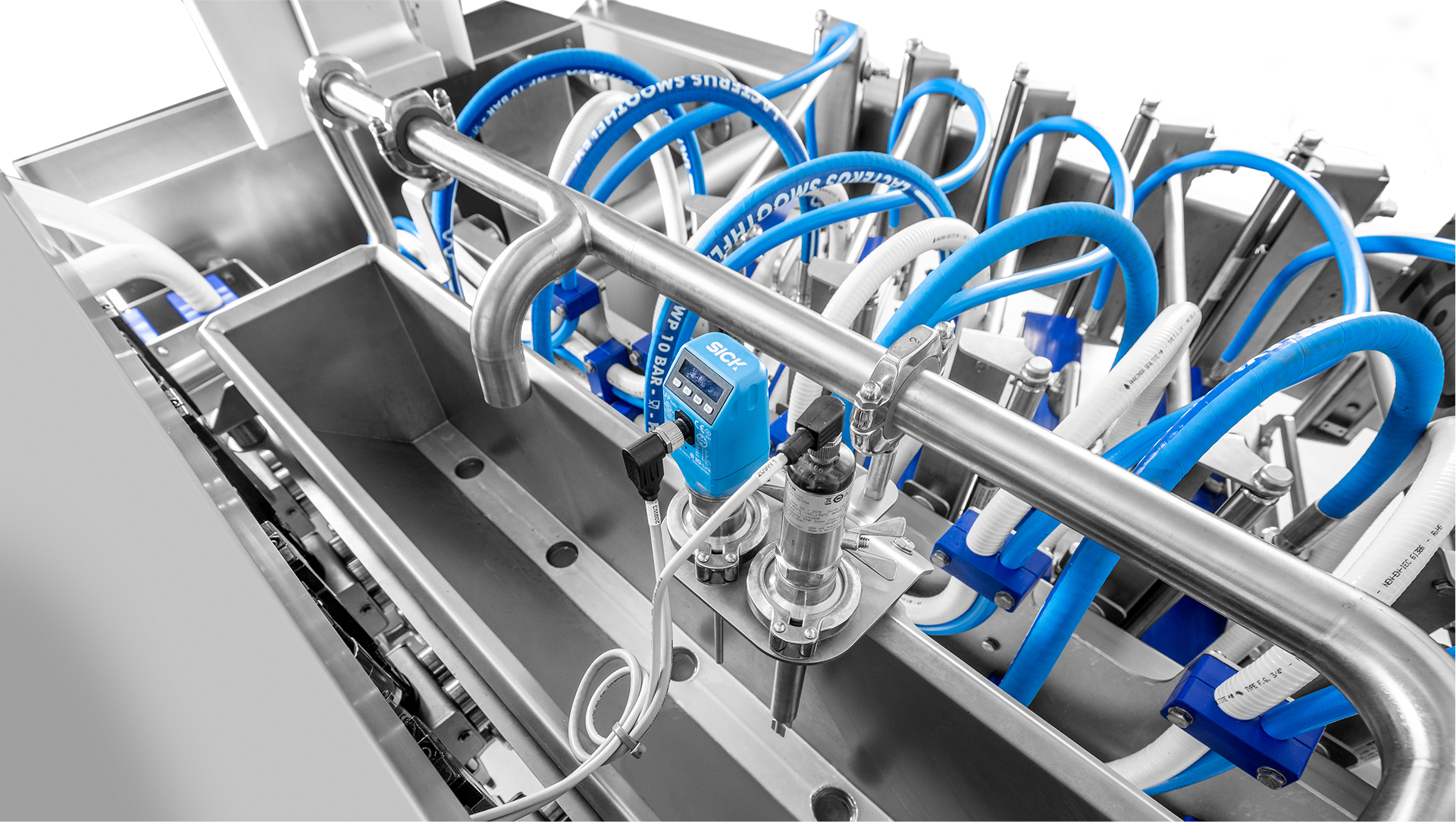
Material that reaches every edge

You do not have to worry about material piling up in the centre of a cavity or failing to reach the edges. The depositor places a large number of small drops that fill the hole completely, even when the cavities are small or have a complex shape. You define the deposit pattern yourself in the FoodJet Designer Studio software, so the result matches your product exactly.

What makes cavity depositing different

FoodJet depositors place material into pockets that other depositors cannot reach:

  • Cavities that are very small, such as the pockets in a waffle
  • Products that are randomly positioned on the conveyor
  • Two different materials deposited one after the other in the same product

How the depositor hits every cavity

Every FoodJet depositor is built for its specific task and applies the right amount of material in each cavity. There are two ways the system knows where to deposit:

  • When products are well aligned across the conveyor, a trigger sensor picks up each product as it moves along the line, so the depositor knows exactly when to apply the material.
  • When products are misaligned, the FoodJet vision system detects the position and any rotation of each product, calculates where every deposit has to go and makes sure it lands correctly.

Cavity depositing in practice

See cavity depositing applied to real products. Each one uses the same vision-guided approach, tuned to a different product and material.

Compound in waffle pockets

Controlled portioning into pockets where clean cut-off and repeatability matter

Jellies on biscuits

Bright, fruity toppings that make every biscuit stand out

Your product not listed? Tell us about it and we will help you out.

Let's look at your cavity application

Want to raise line speed and add something to your product that was impossible to produce until now? Tell us about your product and your line. We test your own product first, so you see the result before you decide, and from that test we advise on the right setup and next steps.

What is cavity depositing?

Cavity depositing is the technique of filling the cavities of products like waffles, biscuits and moulded items with a liquid food such as chocolate, jam or caramel. A vision-guided depositor places many small drops that fill the cavity completely to the edges, so no product alignment is needed.

Can FoodJet fill very small or complex cavities, like waffle pockets?

Yes. The depositor places a large number of small drops rather than one stream, so it fills small and complex cavities completely without piling material in the centre or missing the edges.

Do the products need to be aligned on the conveyor?

No. Vision technology detects the position and rotation of each product, so the depositor places material accurately even when products are randomly positioned. When products are already aligned, a trigger sensor can be used instead.

Can the depositor place two different materials in the same product?

Yes. The system can deposit two different materials one after the other in the same product, which makes products possible that ordinary depositing equipment cannot produce.

What products can be cavity-filled?

Typical examples are compound in waffle pockets, jellies on biscuits and chocolate-filled egg waffles. Because each system is built around your product, other cavitied products can be handled too.

How does the depositor avoid spilling outside the cavity?

It places small, controlled drops exactly where the vision system locates the cavity, filling the hole to the edges without overflowing onto the surface or the conveyor. You set the deposit pattern in the FoodJet Designer Studio software.

Increase accuracy, improve speed and add a unique touch