
FoodJet

Surface filling

Surface filling is the technique of covering the entire surface of a product with an even layer of a liquid food such as sauce, butter or batter, while keeping a defined sauce-free edge. Vision technology recognises the shape of every product on the conveyor, so the material lands on the product and not around it, even on irregular or randomly placed products. When you change product shapes you upload the matching recipe and keep running, with no mechanical change-overs.

Surface filling with FoodJet depositors

Fill or cover the entire surface of your product with the depositors of FoodJet and improve the efficiency of your production line. The vision technology reduces waste of material and lets you run at high production speeds while keeping a clean, even visual result. Every depositor for surface filling or surface covering is built around your product and your material.

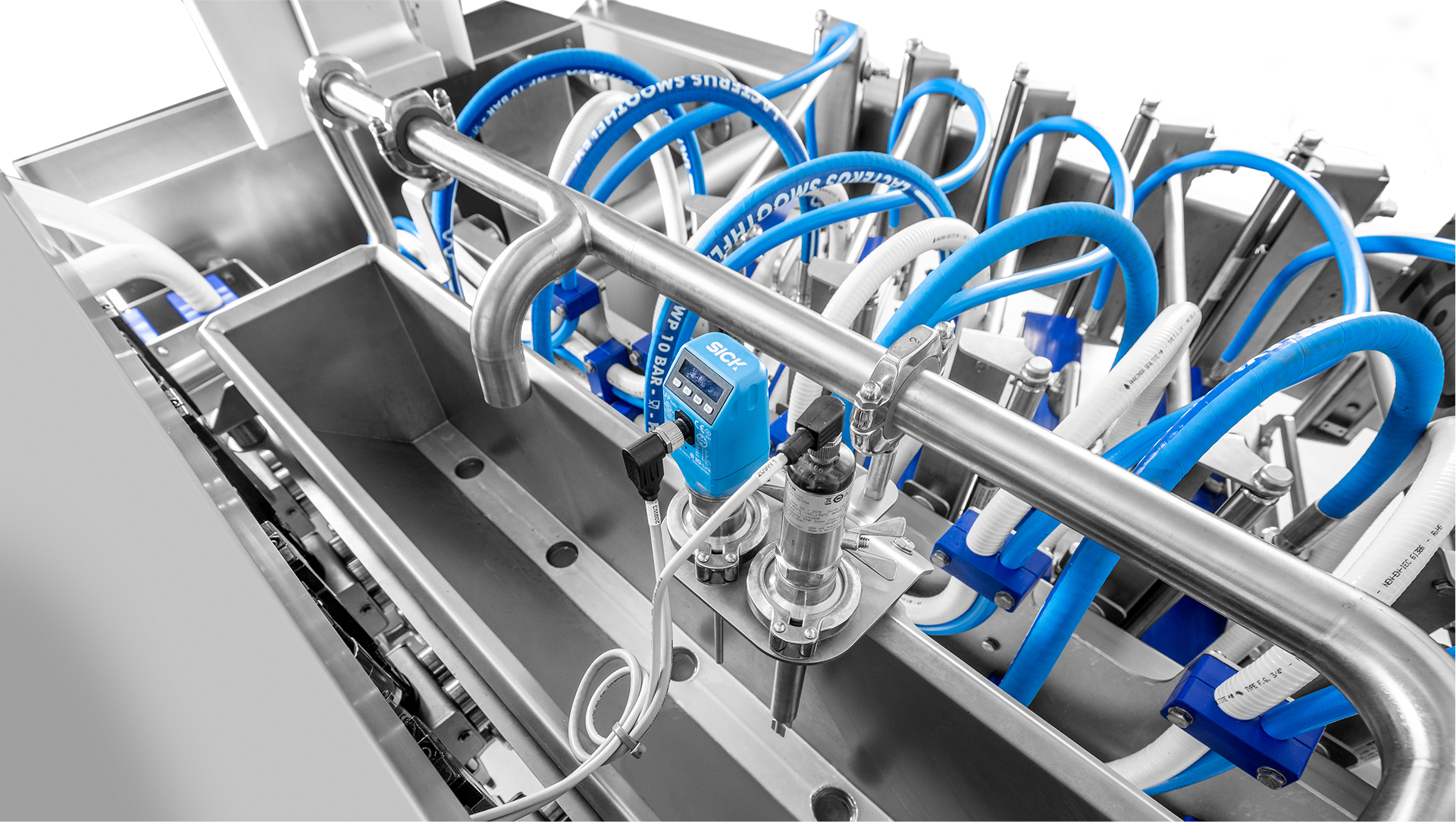
An even layer, edge to edge

Do you want to fill the entire surface of your product? FoodJet systems are designed to apply material in an even layer where other depositors fall short:

  • High production speeds are handled without trouble.
  • Even when your material contains inclusions, the nozzles keep the surface smooth.
  • Consistent visual quality on every product.

Keep a clean, sauce-free edge on any shape

Producing irregular or unusual shapes is no problem. The FoodJet vision system finds and detects any shape, and the depositor covers the surface exactly as you want it. You define the sauce-free edge once and save it in the product recipe. The FoodJet Free Form Pattern Generator software then keeps the material off the edge. When you change product shapes you simply upload the matching recipe, with no mechanical change-overs.

A frame that fits your line

FoodJet depositors come in two frame types, and the right one depends on your process and production line:

  • Movable depositors: C-shaped frames that slide over an existing conveyor.
  • Stationary depositors: frames mounted to the floor in a fixed position.

Surface filling in practice

See surface filling applied to real products. Each one uses the same vision-guided approach, tuned to a different product and material.

Sauce on pizzas

Even base layers and repeatable patterns for consistent coverage and portion control.

Garlic butter depositing

Tiger paste depositing

Your product not listed? Tell us about it and we will help you out.

Let's look at your surface-filling application

Want to raise line speed and give your product a consistent finish on every piece? Tell us about your product and your line. We test your own product first, so you see the even layer and the clean edge before you decide, and from that test we advise on the right setup and next steps.

What is surface filling?

Surface filling is the technique of covering the full surface of a product with an even layer of sauce, butter, batter or other liquid food, while keeping a defined sauce-free edge. A vision-guided depositor follows the shape of each product, so it works on irregular and randomly placed products without spilling onto the conveyor.

Can FoodJet keep a sauce-free edge on irregular products?

Yes. You define the sauce-free edge once and save it in the product recipe. The Free Form Pattern Generator software keeps the material off the edge, even on irregular shapes, so nothing spills onto the conveyor.

Does surface filling work on randomly placed or odd-shaped products?

Yes. The vision system finds and detects any shape and any position, so the depositor covers each product correctly without the products being aligned first.

How does FoodJet reduce waste during surface filling?

The vision technology places material only where it belongs, on the product surface within the sauce-free edge, so very little ends up on the conveyor. That keeps material waste low while running at high speed.

Can the line switch between product shapes without mechanical change-overs?

Yes. To change shapes you upload the matching recipe and keep running. The precision lives in the software, so there are no mechanical change-overs between products.

What products are typically surface-filled?

Common examples are pizza with sauce, Flammkuchen or tarte flambée, bread with butter, and tiger paste on buns. Because each system is built around your product, other surface products can be handled too.

Increase accuracy, improve speed and add a unique touch