

Chocolate decoration adds a distinctive finish to donuts, with the portion per donut you set in the recipe. FoodJet depositors apply chocolate or compound inline, from simple drizzles to more complex patterns. For aligned products, FoodJet Control Platform (FJCP) defines deposit positions and pattern layouts. If the donut position varies or the products rotate, vision guidance detects the position and orientation of each piece. The setup is tuned to your donut format, line layout, and material behavior.
Watch how it works
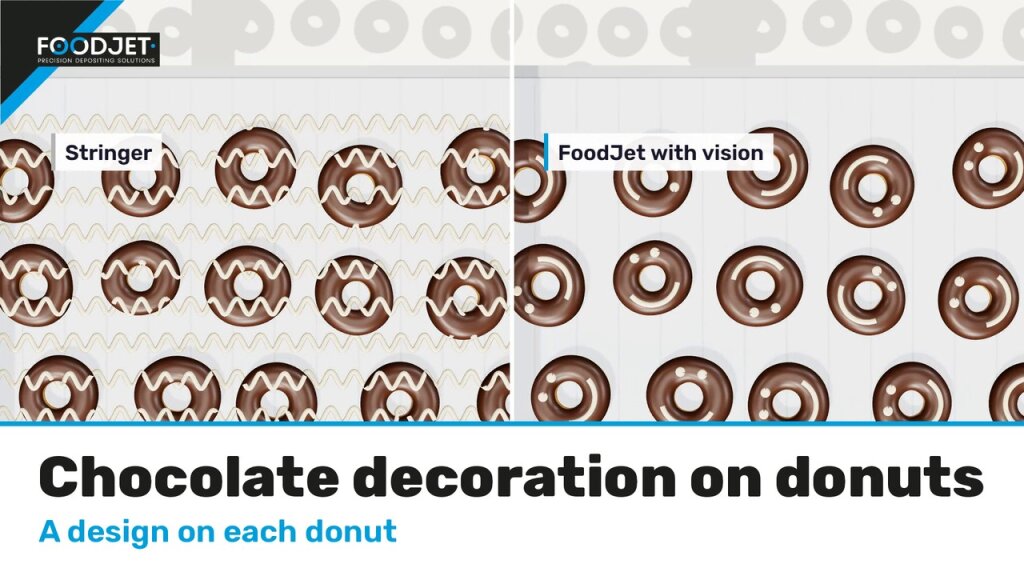
A 70-second animation: vision finds each donut, so the design lands on the donut instead of as lines across the belt, also when it shifts or rotates.
FoodJet enables inline chocolate decoration on donuts and Berliners, with controlled deposits per product. You can apply lines and patterns, and tune depositing to chocolate or compound characteristics such as viscosity and temperature. When donut position varies or products rotate, vision guidance detects each donut and adjusts the deposit. The system is configured to your donut format and line layout.
What chocolate decorating on donuts means (and why it matters)
Chocolate decorating adds a visual signature and product differentiation without changing the base donut. A depositor applies a controlled amount of chocolate or compound to each product. Compared with manual decoration, inline depositing applies the amount and pattern you set in the recipe. The final result depends on donut geometry, line handling and chocolate behavior at process temperature, so depositing parameters are typically tuned to your specific product and line.
Decoration styles you can deposit (patterns, lines, and drizzles)
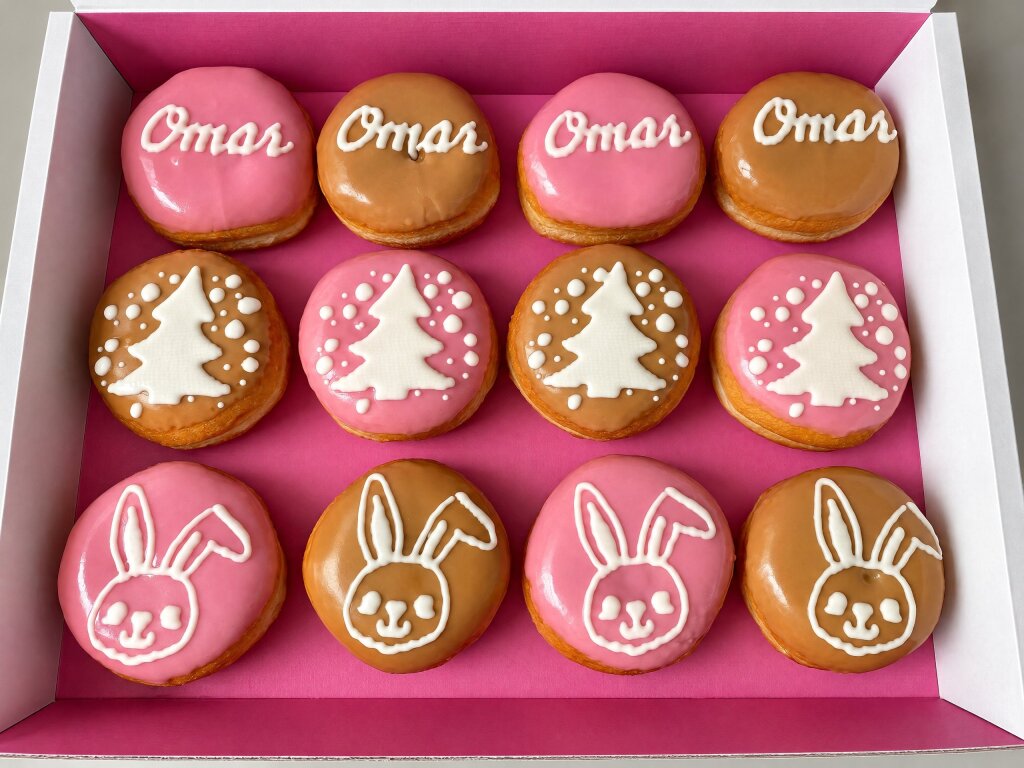
Depending on the desired look, decoration can range from simple lines and drizzles to more complex patterns. In FJCP, you define deposit positions and pattern layouts for each design. This supports fast variant changeovers by adjusting the pattern configuration rather than rebuilding your process. The practical complexity of patterns depends on product presentation and the required accuracy.
Material considerations (chocolate/compound viscosity and temperature)
Chocolate and compound behavior are influenced by viscosity and temperature stability. In practice, this affects deposit definition, edge sharpness, and repeatability. A suitable supply setup helps keep the material within the required process window so it deposits cleanly. Share your material type and target finish, and we can recommend a practical configuration for your line.
Positioning accuracy (sensor vs vision guidance)
For stable, well-aligned donuts, a sensor-based approach is often sufficient to trigger depositing at the right moment. If products can shift, vary in spacing, or rotate, vision guidance can detect position and orientation for each piece and adjust the deposition accordingly. You do not have to rely on perfect upstream alignment. The most suitable option depends on product presentation, required accuracy, and line behavior.
Where to place the depositor in your donut line
Chocolate decorating is typically integrated when donuts are stable on the conveyor and ready for decoration. Placement is determined by line layout, product handling, and the behavior of the chocolate at process temperature. In practice, the best position is selected based on available space, product presentation, and the required decoration accuracy.
Chocolate decoration in one inline step
FoodJet decorates donuts with chocolate and compound inline, with depositing tuned to your product and line. Vision guidance handles position variation, so you do not need manual alignment, and you can switch designs by changing the pattern configuration.
Random designs in a single run
You can even choose to apply different designs to different lanes; in the same production run. You can go as far as using a random generator to pick pre-defined designs to random products in the production run.
Popular machines
Check out machines


Every FoodJet system is configured and quoted to fit your line and your requirements.

