
FoodJet

Hygiene and cleaning

Surface filling is the technique of covering the entire surface of a product with an even layer of a liquid food such as sauce, butter or batter, while keeping a defined sauce-free edge. Vision technology recognises the shape of every product on the conveyor, so the material lands on the product and not around it, even on irregular or randomly placed products. When you change product shapes you upload the matching recipe and keep running, with no mechanical change-overs.

How a FoodJet depositor is cleaned

A FoodJet depositor is built to be cleaned without taking it apart. The outside is hosed down, and the product path is cleaned with a simple rinse program or, for the highest hygiene requirements, an optional CIP skid. Most lines are clean again in about thirty minutes. That matters because the common alternative is dismantling the machine for every clean, which costs time and risks lost or damaged parts.
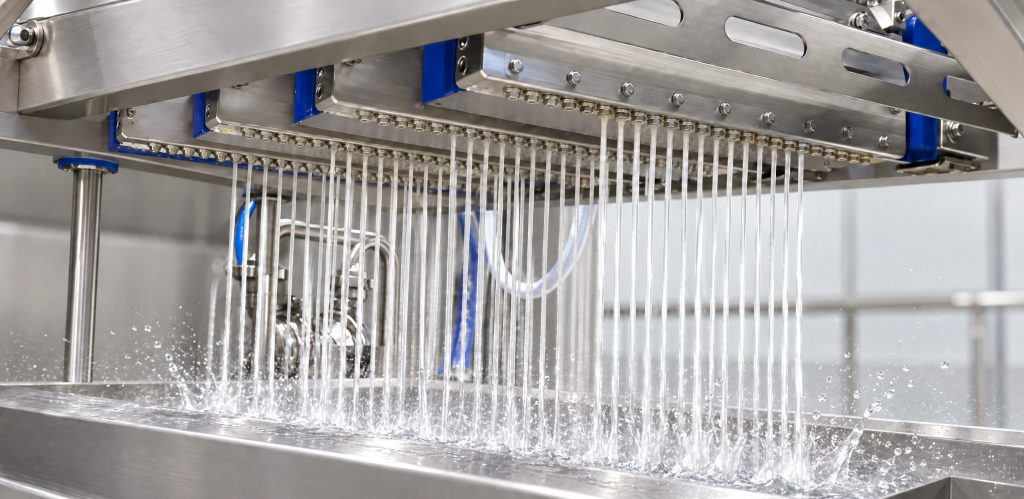
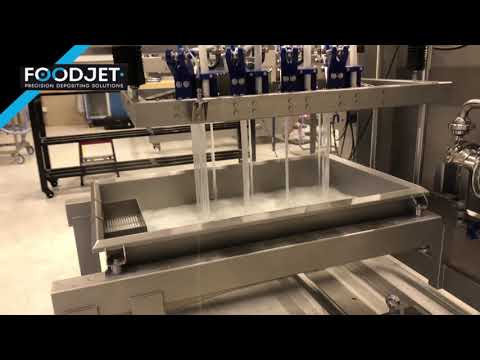
Clean without taking the machine apart

On most depositing machines, cleaning means dismantling: you take the machine apart, clean the parts, and put it back together for every wash. That costs time and labour, and parts can be mislaid or damaged in the process. A FoodJet depositor is designed to be cleaned in place, without that teardown. Many customers move to FoodJet for exactly this reason, because they are done with the daily dismantling routine.

Three ways to clean, to match your line

You clean a FoodJet depositor at the level your line needs:

  • Hose down the outside. The exterior is built for a simple hose-down.
  • Rinse program for the product path. Most customers run an easy rinse program that flushes the product path clean, no dismantling required.
  • CIP skid for the highest requirements (optional). For lines that need the ultimate in hygiene and convenience, you can connect a CIP skid: connect it, press a button, walk away, and the machine cleans itself.

Clean in about thirty minutes

In most cases a clean takes around thirty minutes. A quick clean between products is considerably shorter, and a thorough end-of-day clean can take a little longer, depending on the material and your hygiene requirements. Because there is no teardown, the time you spend is rinsing and checking, not unbolting and reassembling.

Less downtime, fewer lost or broken parts

Cleaning without dismantling has knock-on benefits. The line is back in production sooner, so cleaning eats less into your running time. There are no small parts to mislay or damage during teardown and reassembly. And because the routine is simple and repeatable, cleaning is less dependent on who does it. Clean by design is one of FoodJet's principles, and it shows in the daily routine.

Proven on your own product

Cleaning depends on what you run, so the best way to judge it is on your own product. In a trial you see not only the deposit, but also how the machine cleans down afterwards with your material and your hygiene requirements. You get a realistic picture of the cleaning routine before you commit.

Do I have to take the machine apart to clean it?

No. A FoodJet depositor is designed to be cleaned in place, without dismantling. That is one of the main reasons customers move to FoodJet, because most machines require a teardown for every clean.

How long does cleaning take?

In most cases about thirty minutes. A quick clean between products is shorter, and a thorough end-of-day clean can take a little longer, depending on the material and your hygiene requirements.

Can the machine clean itself automatically?

For the highest hygiene requirements you can connect an optional CIP skid. You connect it, press a button and walk away, and the machine cleans itself.

How is the outside of the machine cleaned?

The exterior is built for a simple hose-down.

Why is cleaning without dismantling better?

It saves time and labour, the line is back in production sooner, and there are no small parts to mislay or damage during teardown and reassembly.

Increase accuracy, improve speed and add a unique touch