
FoodJet

Materials and viscosity

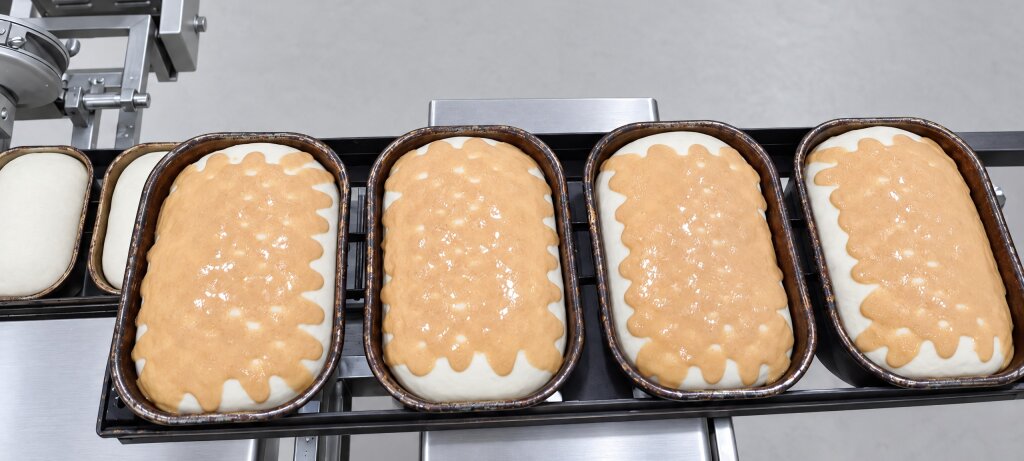
Surface filling is the technique of covering the entire surface of a product with an even layer of a liquid food such as sauce, butter or batter, while keeping a defined sauce-free edge. Vision technology recognises the shape of every product on the conveyor, so the material lands on the product and not around it, even on irregular or randomly placed products. When you change product shapes you upload the matching recipe and keep running, with no mechanical change-overs.

Which products can a FoodJet depositor handle?

FoodJet depositors handle a wide range of liquid and semi-liquid foods, from thin sauces to thick pastes, creams, cheese, batters and chocolate. Whether a product runs well comes down to how it behaves: how it flows, its temperature, and whether it carries pieces. You can get a first impression yourself with the self-check below, and because behaviour varies from product to product, we always confirm the fit in a trial with your own material.
Materials we deposit

FoodJet depositors are used across several material families:

  • Sauces: smooth or chunky, such as pizza and pasta sauces.
  • Creams and cheese: whipped cream, creme fraiche, cream cheese and cheese pastes.
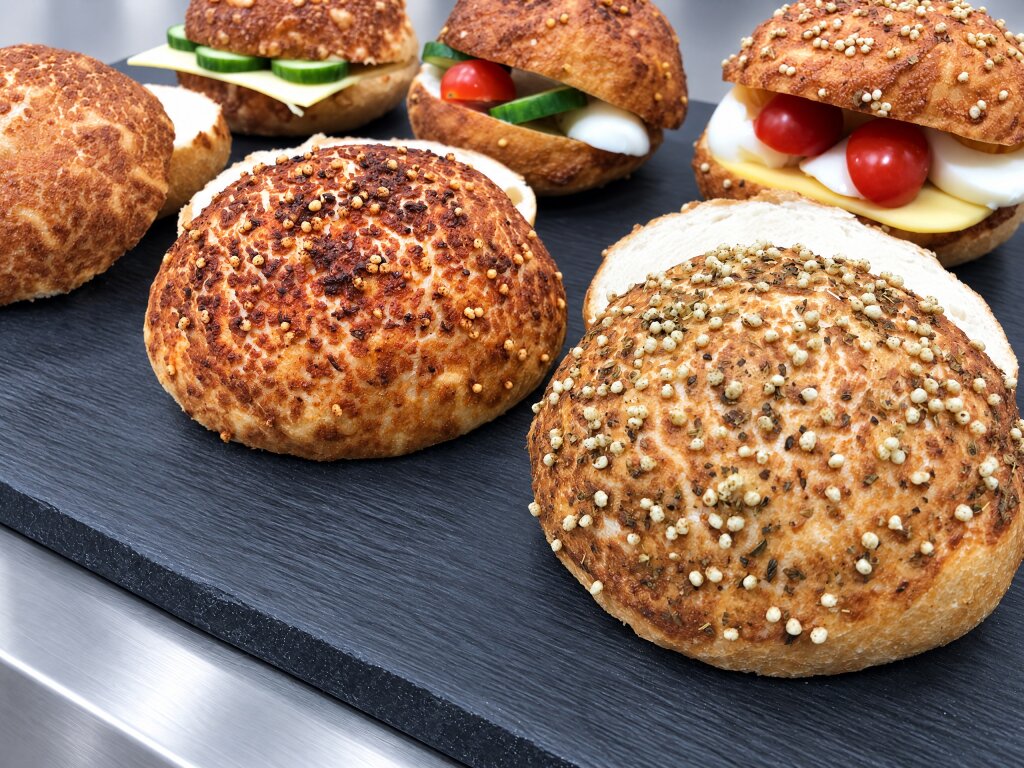
  • Pastes and batters: tiger paste, pancake and waffle batter, and similar mixes.
  • Chocolate and compound: for decoration, surface filling and filling pockets.
  • Oils and emulsions: for spraying or depositing a controlled film.

A quick self-check: is your product a candidate?

You do not need lab equipment for a first impression. Take a spoonful of your product at the temperature you normally process it, and run through five checks:

  • How does it flow off a spoon? A slow, steady stream or a gentle slump is the sweet spot. Runs off like water, or barely moves, is worth a closer look.
  • Are there hard pieces in it? Smooth or soft bits such as herbs or soft fruit are usually fine. Hard pieces such as seeds, nuts or crystals need to match the nozzle size.
  • Is it sticky or stringy? Sliding off clean is fine. Clinging, stringing or tailing needs extra attention at cut-off.
  • Does it change when it cools or warms? FoodJet runs products between 5 and 65 degrees Celsius. Products that thicken, set or solidify when cooler, such as fat, chocolate or gelatin, need their temperature held.
  • Does it stay mixed? Staying uniform is fine. A watery layer or settling solids may need recirculation, and sometimes an emulsifier.

Mostly good signs means your product is promising. One or two flags rarely rules it out, it just means we want a closer look. The definitive answer is always a trial with your actual product.

What affects how a product deposits

Three properties matter most. Viscosity, how thick or thin the product is, decides how it flows through the nozzle and whether the deposit spreads or holds its shape. Temperature matters because many products only flow well in a certain range, and FoodJet runs products between 5 and 65 degrees Celsius. For products that need to stay warm, such as chocolate and compound, FoodJet offers heated depositing so the viscosity stays stable through the head. Pieces and inclusions matter because the nozzle and valve have to pass the largest piece without blocking or breaking it. Stickiness, air content and separation can play a role too, which is why we look at the whole product, not one number.

How we prove the fit for your product

Because these properties interact, behaviour on the line is hard to predict on paper. So we test. Share your product and how it is prepared, send a sample of around 2 to 5 kilograms for an initial evaluation, and we run it on our own equipment. You see the deposit, the pattern and the speed on your actual material, and you get a configuration matched to your product rather than a generic setting.

See it on your own product

Run through the self-check, then share your product and how it is prepared. We will run a trial on your own material and advise the right configuration.

What kind of products can a FoodJet depositor handle?

A wide range of liquid and semi-liquid foods: smooth and chunky sauces, creams and cheese, pastes and batters, chocolate and compound, and oils. Whether a specific product runs well depends on how it flows, its temperature and any pieces it carries, which we confirm in a trial.

How can I tell if my product is suitable, without lab equipment?

Take a spoonful at your normal process temperature and check five things: how it flows off a spoon, whether it has hard pieces, whether it is sticky or stringy, whether it changes when it cools or warms, and whether it stays mixed. Mostly good signs means it is promising; flags just mean we want a closer look.

Can you deposit hot products like chocolate?

Yes. FoodJet offers heated depositing, so temperature-sensitive products such as chocolate and compound keep a stable viscosity through the head. FoodJet runs products between 5 and 65 degrees Celsius.

Can you deposit products with pieces or inclusions?

Yes. The nozzle and valve are selected to pass the largest piece in your product without blocking or breaking it, so chunky and inclusion-rich products deposit reliably.

How do I know for sure my product will run?

We confirm it in a trial with your actual material. Send a sample of around 2 to 5 kilograms for an initial evaluation and we run it on our equipment, so you see the result before you commit.

Increase accuracy, improve speed and add a unique touch