FoodJet
Tiger bread loaves on a stainless steel table

Tiger paste depositing on bread and buns

FoodJet deposits tiger paste directly onto bread and buns, in any pattern, without a mould. Vision guidance places the paste on each product, wherever it sits on the line, so the pattern lands on the product, with less waste around it.

Tiger paste gives bread its crunchy, cracked crust
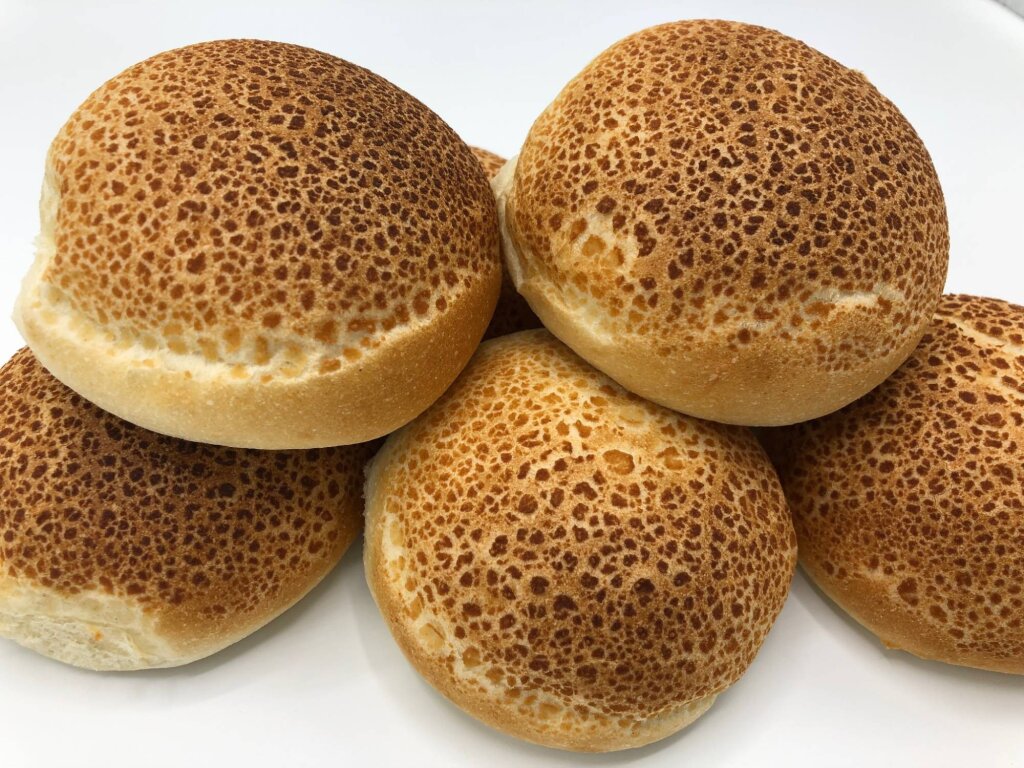
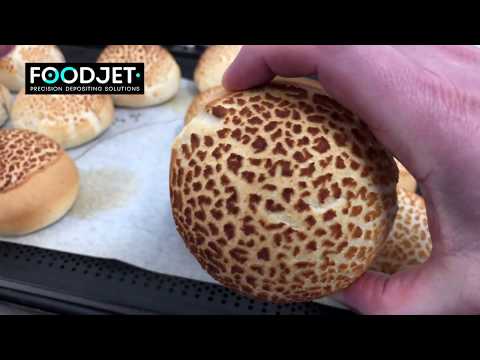
Close-up of a stack of tiger rolls with a crackled, spotted crust

Tiger paste (also called tiger wash, Dutch crust or giraffe bread paste) is applied as a thin layer before baking. During baking the paste dries and cracks into the recognisable tiger pattern.

The result depends on the recipe, the paste consistency, the bake profile and how evenly the paste is applied.
Why hand and roller application fall short

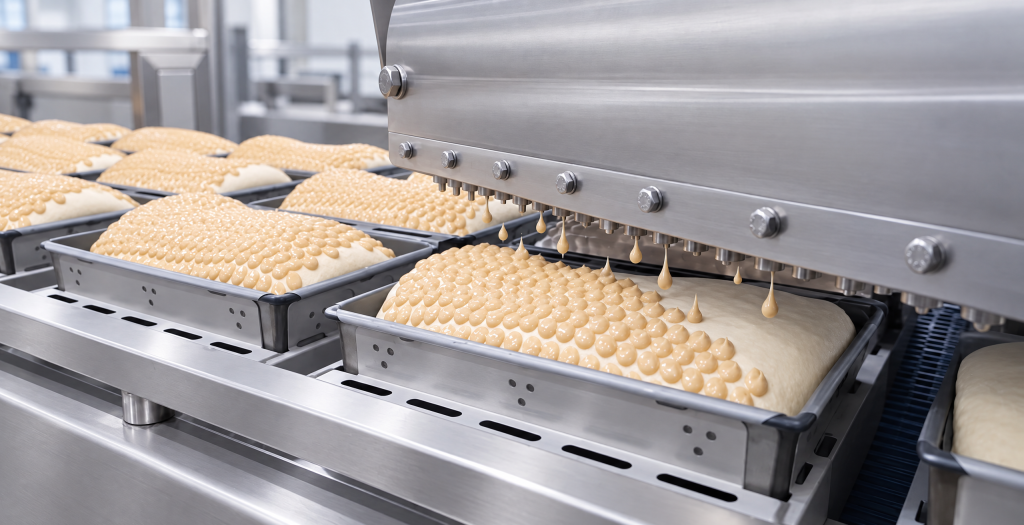
Depositing head placing rows of paste dots on bread dough in baking tins

Applying tiger paste by hand slows your production down, and rollers do not place the paste accurately enough for a modern line.

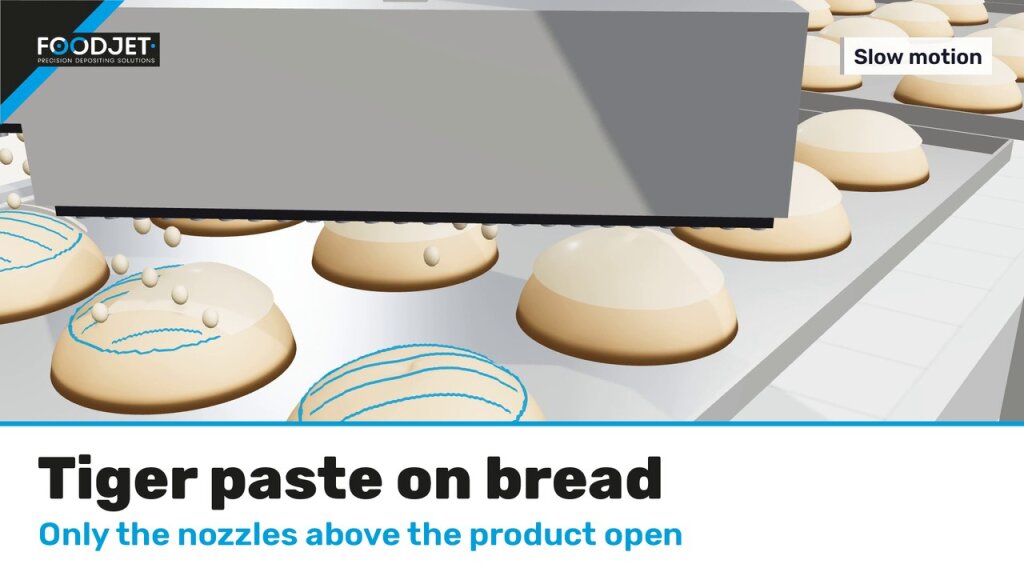
FoodJet applies the paste through an array of small nozzles that are controlled individually. Depending on product size and the pattern you want, only the nozzles above the product open, so each product gets the pattern and layer thickness set in the recipe.

Tiger paste with inclusions

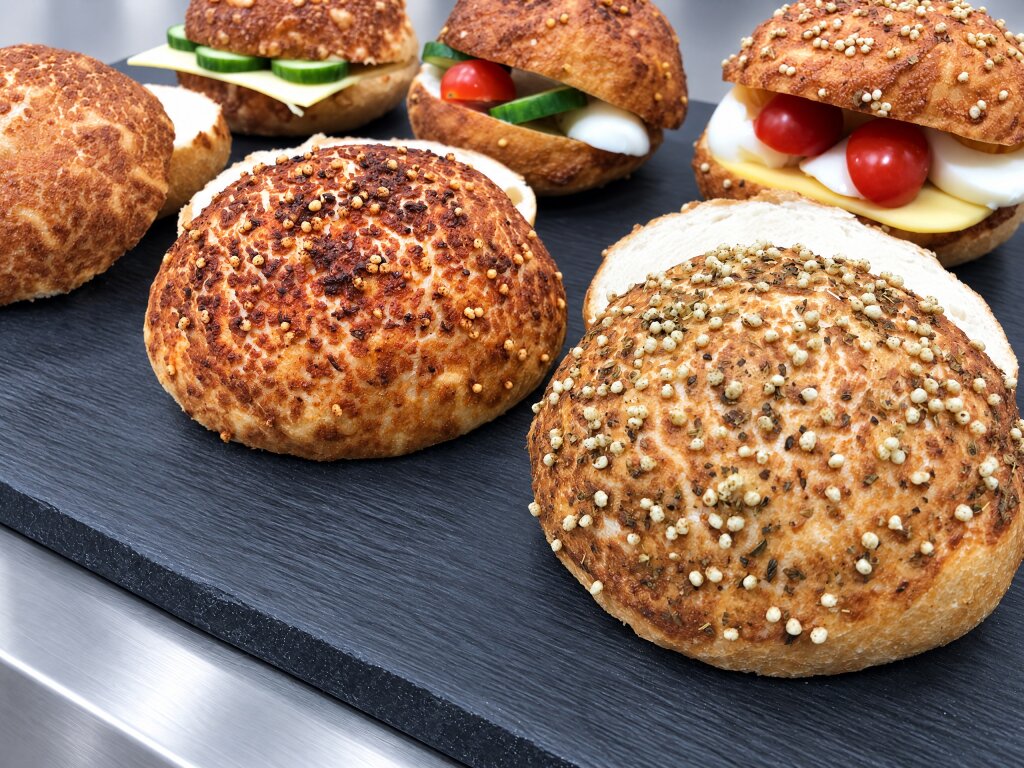
Close-up of burger buns with paprika and herb tiger topping on a slate board

Paste with particulates is hard for many depositors. FoodJet depositing heads handle inclusions up to a certain size. That size depends on the nozzle diameter and the material, which is why there are different depositing heads:

  • Depositing head FJ30, for materials with larger inclusions
  • Depositing heads FJ31 and FJ32, for materials with inclusions

Before you invest, we test your paste on your product in a trial.

See tiger paste depositing in action

In this video, a FoodJet depositor applies a thin layer of tiger paste directly onto bread, wherever the product sits on the line.

  • Tiger paste depositing on bread: only the nozzles above the product open

    Tiger paste depositing on bread: only the nozzles above the product open

    Animation: a sensor detects each product and only the nozzles above it open, so the paste goes on your bread, rolls and buns, and less beside them. More info here

  • Tiger paste depositing with variations

    Tiger paste depositing with variations

    Exciting tiger paste variations made possible with FoodJet food depositors. More info here

  • Tiger paste depositing, also with inclusions

    Tiger paste depositing, also with inclusions

    The FoodJet depositing system handles tiger paste, including tiger paste with inclusions. More info here

  • Tiger paste depositing on buns or bread

    Tiger paste depositing on buns or bread

    It is not easy to target tiger paste precisely on buns, or bread for that matter. More info here

Ready-to-use paste or a powder mix?

Tiger paste comes in two forms, both in a wide range of flavours.

  • Ready-to-use paste comes in buckets and goes straight into the buffer tank. The depositor pumps it onto the products without further processing.
  • A powder mix is mixed with water into a lump-free paste before production. It is usually cheaper, but needs extra equipment to prepare.

Tiger paste depositing, step by step

  1. The operator selects the recipe in FJCP (FoodJet Control Platform).
  2. The paste goes into a buffer tank.
  3. A pump keeps a stable flow to the depositing head.
  4. The nozzle array deposits the paste onto the products as they pass on the conveyor.
  5. Optionally, a camera detects each product so the paste lands on target.
  6. Each product gets a set amount of paste in a set position and layer thickness.

The exact configuration depends on your product range, your paste and your line.

Less paste in the oven, less cleaning

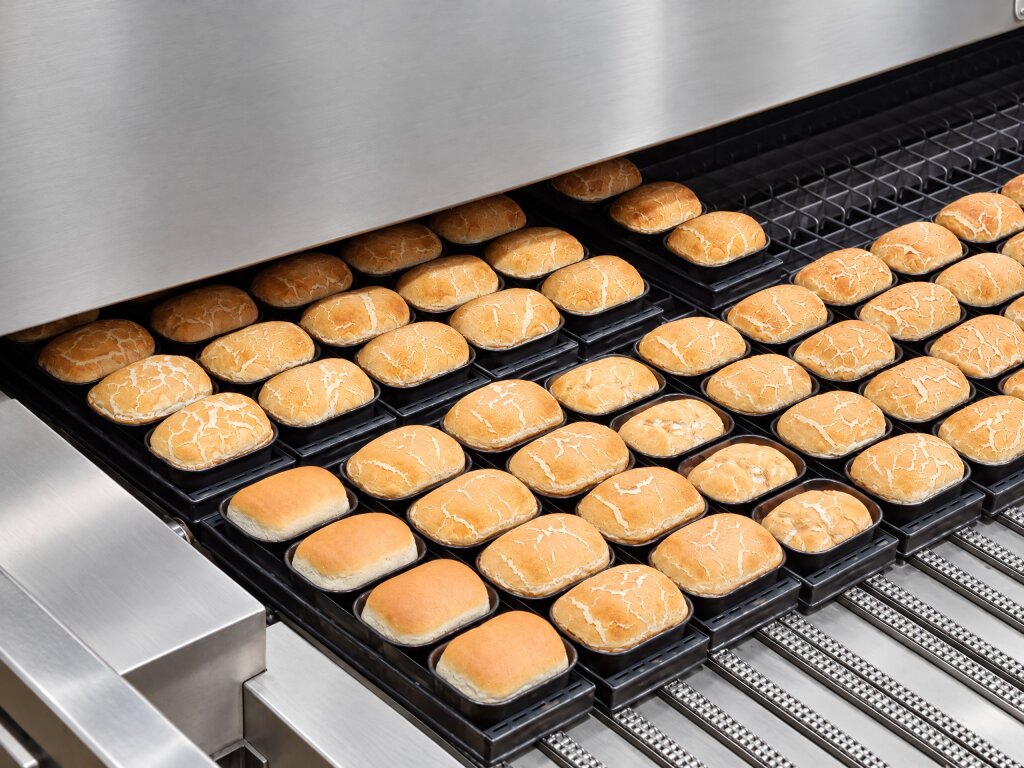
Tiger buns leaving a tunnel oven

When paste misses the product, you lose material. Worse, the paste ends up in the oven, where it means extra cleaning, burned material and unwanted smells.

FoodJet places the set amount of paste on the product, so far less ends up next to it.

Want to see it on your own bread? Request a trial

More for bread and bakery

Frequently asked questions

What is tiger paste?

Tiger paste, also called tiger wash or Dutch crust, is a paste applied to bread before baking. It dries and cracks in the oven into the typical tiger pattern.

Can FoodJet deposit tiger paste with inclusions?

Yes, up to a certain particle size. The limit depends on the nozzle diameter and the paste, and we choose the depositing head to match. We test your paste on your product first.

Do I need a mould or a fixed product position?

No. FoodJet deposits without a mould, and optional vision guidance detects each product on the conveyor so the paste lands on target.

MDM300 mobile depositor medium, up to 300 mm working width, 3D render

MDM300

Mobile Depositor Medium: surface filling up to 300 mm

MDSUC3 mobile depositor with integrated supply unit for ambient-temperature materials, 3D render

MDSUC3

Mobile depositor with integrated supply unit, for ambient-temperature materials

MDLV800 mobile depositor large with vision, up to 800 mm working width, 3D render

MDLV800

Mobile Depositor Large with Vision: precision surface filling up to 800 mm

Every FoodJet system is configured and quoted to fit your line and your requirements.