
FoodJet's nut depositor places nuts and seeds onto your products exactly where you want them, instead of showering them across the whole line. The nuts or seeds are mixed with a food-grade carrier material so they can be pumped, and an array of individually controlled nozzles applies them only where they are needed, with no spillage on the conveyor or downstream.
Targeted depositing, not a waterfall
A waterfall depositor showers nuts and seeds across the full belt, so most of the material lands next to the product, not on it. That is waste and a mess to clean up. FoodJet places nuts and seeds only where they belong: the nozzles operate individually and target each product, so the material lands on the product and not on the belt.
How nuts and seeds become pumpable
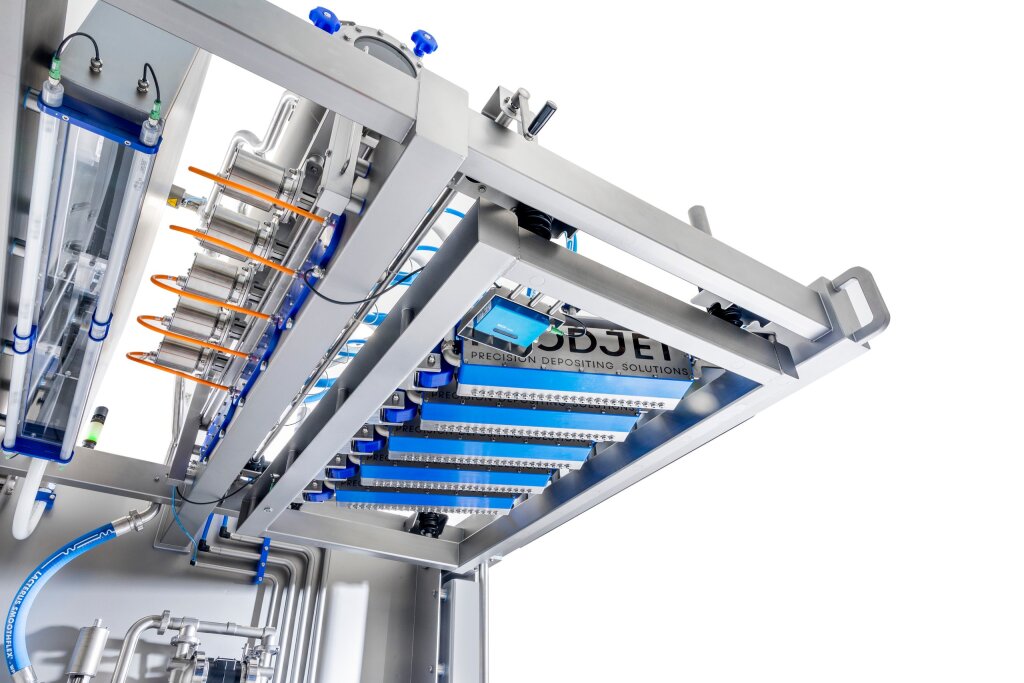
Nuts and seeds are solid, so on their own they cannot be pumped and dosed accurately. FoodJet mixes them with a food-grade carrier material, a liquid foodstuff chosen to match your product and process. In the carrier the nuts and seeds can be pumped through the system and deposited in a controlled way, so you place a measured amount exactly where you want it.
Check out videos
Check all videos-

Seed sprinkling with FoodJet’s nut depositor
FoodJet's nut depositor places nuts and seeds with targeted precision, reducing spillage and contamination downstream.
A clean conveyor, upstream and down
Because the material lands on the product and not around it, you keep the conveyor clean and reduce nuts and seeds falling off downstream. That means less waste and less cleaning, without the spillage that comes with a waterfall depositor.
Working out your capacity
You can get a solid estimate of your line capacity yourself, with four numbers: the size of your product, the pitch (the spacing between products, across and along the belt), the number of lanes, and the belt speed. Product size, pitch and lanes together decide how many products fit on the belt at any moment. Multiply that by the belt speed and you have your capacity in products per minute, and from there per hour or per shift. This part is straight maths, and you do not need us for it.
There is one factor that does need our input: can we deposit your product accurately at the belt speed you are aiming for? That depends on the nuts or seeds and on the carrier they are mixed with, so the achievable speed varies by product. Rather than quote a fixed figure here, we establish it with you in a trial with your actual product.
More products on the same belt
The core of a FoodJet system is the depositing head: an array of individually controlled nozzles across the full width of the belt. Each nozzle deposits on demand, so the head places material on any product, anywhere across the belt, with no fixed tooling and no set product positions. You run products closer together and across the full width, so the same belt and the same speed deliver more products per minute. The smaller the product, the more this counts.
Explore related applications


Sauce depositing on sandwiches
An even spread in every bite

You set the amount and the placement
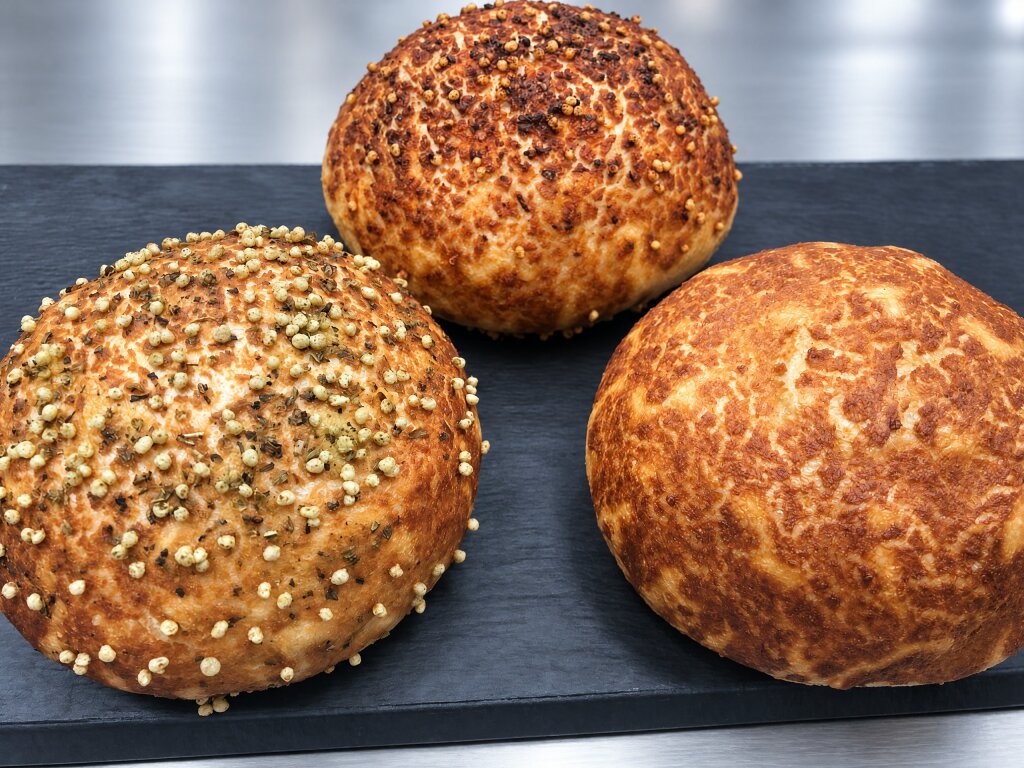
You set the amount of nuts and seeds per product and where they go, and the nozzles apply them only in those positions.
A nut and seed system built around your line
Every FoodJet system is configured to your line, so no two are identical. A nut and seed setup is matched to your product, your nuts or seeds, the carrier material and your throughput, as a standalone unit or integrated into your existing conveyor. The table below shows what a typical nut and seed application looks like.
Application | Depositing nuts and seeds onto products in targeted positions |
Materials | Nuts and seeds mixed with a food-grade carrier material |
Carrier | Liquid foodstuff matched to your product and process |
Substrates | Bakery and food products on a conveyor |
Placement | Targeted; individually controlled nozzles, applied only where needed |
Spillage | Minimal; no waterfall across the whole belt |
Conveyor width | Configured to your line, for example a standard 800 mm belt |
Line speed | Established per product in a trial |
Amount | Set per product |
System | Standalone or integrated into your existing conveyor |
FAQ
Every FoodJet system is configured and quoted to fit your line and your requirements.