You can get a solid estimate of your line capacity yourself, with four numbers: the size of your product, the pitch (the spacing between products, across and along the belt), the number of lanes, and the belt speed. Product size, pitch and lanes together decide how many products fit on the belt at any moment. Multiply that by the belt speed and you have your capacity in products per minute, and from there per hour or per shift. This part is straight maths, and you do not need us for it.
There is one factor that does need our input: can we deposit your product accurately at the belt speed you are aiming for? That depends on the material. As a guide, line speeds up to 10 m/min have proven possible for butter and cream. Viscosity, temperature and the way a product flows all affect how fast we can dose it cleanly, so treat any figure as a guide for a first estimate, not as a limit. For every application we run a trial with your actual product, so the capacity you plan with is one we have measured, not one we have assumed.
More products on the same belt
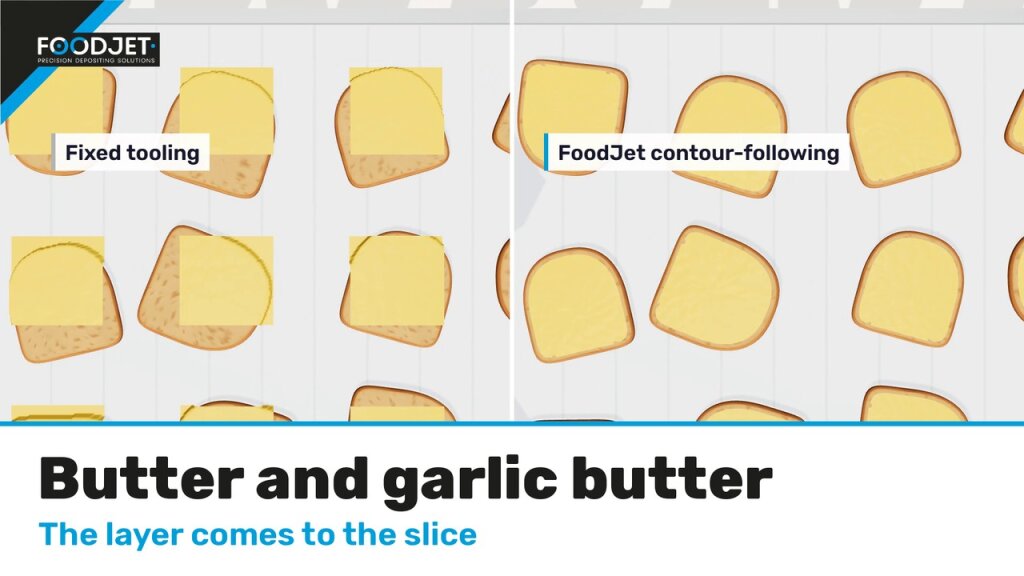
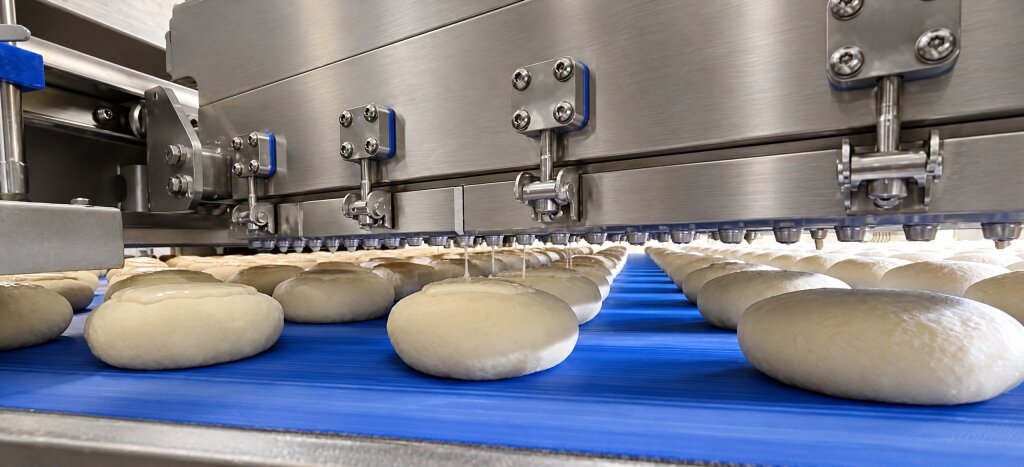
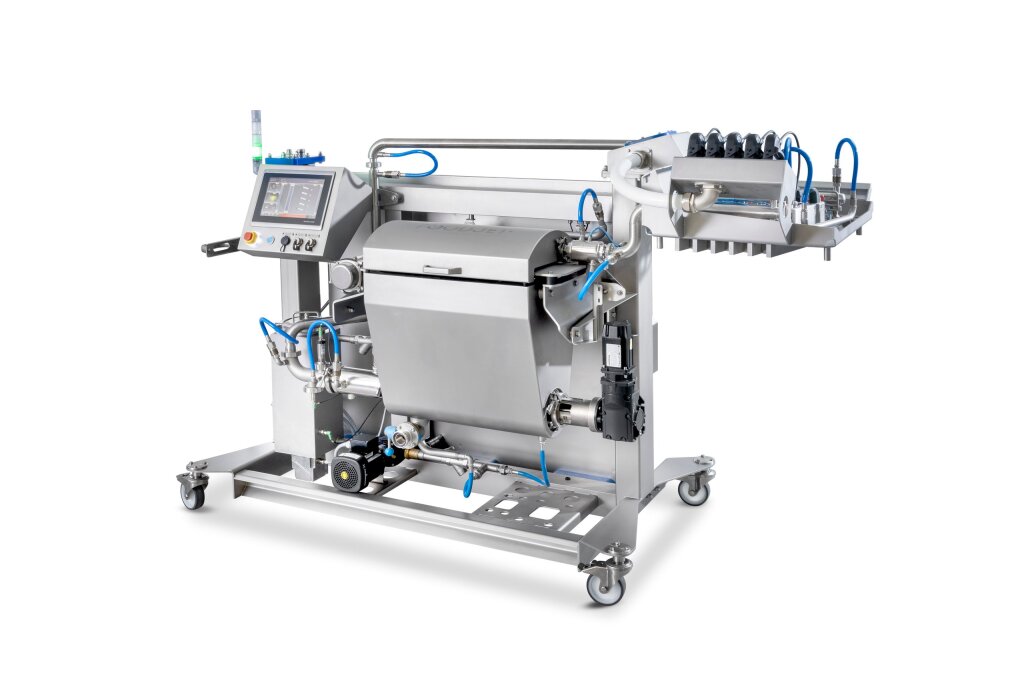
The core of a FoodJet system is the depositing head: an array of individually controlled nozzles across the full width of the belt. Each nozzle deposits on demand, so the head places the layer on any product, anywhere across the belt, with no fixed tooling and no set product positions. Vision recognises where every product sits and the nozzle array deposits exactly there. Together this means you do not lose belt space to alignment or to a fixed pitch: you run products closer together and across the full width, so the same belt and the same speed deliver more products per minute. The smaller the product, the more this counts.